3 sources checked · 2 source groups included · 10m ago
Still Watching
New maps show where toxic lead dust could spread after Iowa detonation
CBS News and WISN12 Milwaukee (Hearst) describe the same event in different terms.
2 Left1 Center0 Right
Still watching.Optics is waiting for a cleaner match before calling the split.
STILL WATCHING
As of November 25, 2026 at 4:05 PM, this is how Optics News reads the wording differences in this story.
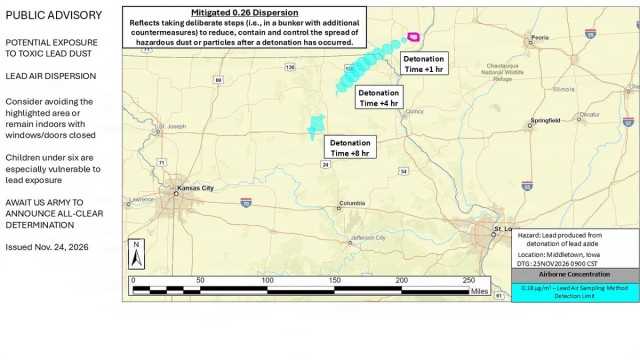
What happenedThe U.S. Army is set to destroy nearly five tons of unstable explosives Wednesday morning. Updated projections show where toxic lead particles could travel and settle.
The headline splitThe left frames it as "Maps show how far lead dust from Iowa detonation could travel". The center frames it as "New maps show where toxic lead dust could spread after Iowa detonation".
Match confidenceMedium confidence. 3 sources across 2 bias buckets. Useful framing signal — check the source list before sharing.
Same-event confidenceMedium
3 sources across 2 bias buckets agree on the event.
Framing confidenceMild
45/99 — small wording differences, not a major framing split.
WHAT EACH SIDE EMPHASIZED
Left / center-leftMaps show how far lead dust from Iowa detonation could travel
CBS News · Center-left · News report
CenterNew maps show where toxic lead dust could spread after Iowa detonation
WISN12 Milwaukee (Hearst) · Center · News report
Right / center-rightNo matching source in this bucket yet.
Maps show how far lead dust from Iowa detonation could travel
Maps of the lead azide detonation in Middletown show the shaded area stretching from near Burlington toward Macon, Missouri, by noon Wednesday. The forecasts will change with the weather.
Plume of smoke rises into the air at Iowa detonation site
The detonation of an Army stockpile of unstable lead azide explosives in Iowa has raised fears of a potential toxic cloud that could travel hundreds of miles southwest and into northeastern...
New maps show where toxic lead dust could spread after Iowa detonation
The U.S. Army is set to destroy nearly five tons of unstable explosives Wednesday morning. Updated projections show where toxic lead particles could travel and settle.